Explainer
High-speed hair dryers explained: digital motors and airflow
Published
Short answer
A high-speed hair dryer uses a small brushless digital motor that spins far faster than a conventional dryer motor, often over 100,000 rpm. That lets it push strong, focused airflow from a lighter, more compact body, so drying relies more on air speed and less on heat. Wattage does not tell you much about this: the Dyson Supersonic is rated at 1600 W, less than many 1875 W conventional dryers, yet it is marketed for fast drying because of its airflow.
Dryers and stylers for this
All 7 picks compared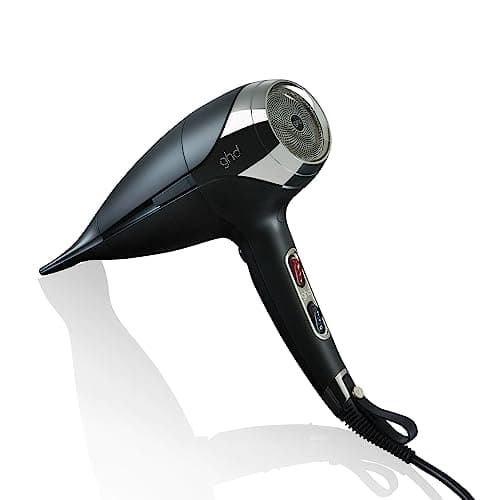
ghd Helios: 1875W brushless, 75mph, low-sound system
See price on AmazonSee it on Amazon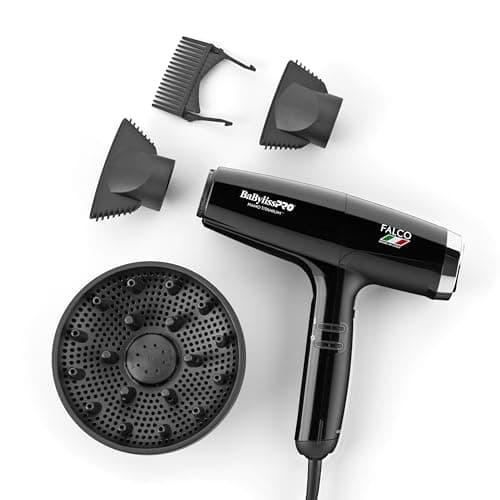
BaBylissPRO Falco: 2000W high-speed digital motor
See price on AmazonSee it on Amazon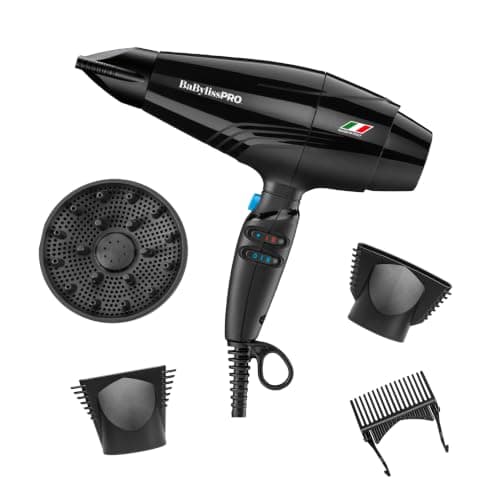
BaBylissPRO Rapido: 2000W brushless Italian motor
See price on AmazonSee it on Amazon

High-speed dryers from Dyson, BaBylissPRO, ghd, T3 and others now dominate the premium end of the market. Their listings mention brushless motors, rpm, air pressure and air multiplier designs, and it is hard to tell what any of it means for your hair. This page is for anyone comparing a high-speed dryer with a conventional one, or wondering why a 1600 W dryer can be faster than a 2000 W one. It explains how brushless motors work, which specs matter, the trade-offs, and who gets the most from paying for one.
What makes a dryer high speed
Every dryer has the same basic parts: an air intake and filter, a motor and fan, a heating element, a nozzle, and controls. A conventional dryer uses a larger brushed motor, usually at the back of the head, spinning at modest speeds. A high-speed dryer uses a small brushless digital motor, often in the handle, spinning much faster with a small multi-blade impeller.
Dyson lists the V9 digital motor in its Airwrap as spinning at up to 110,000 rpm and generating 3.2 kPa of air pressure. Faster spin and higher pressure mean the dryer can push more air through a smaller body, so it can be lighter and better balanced. The term high speed in listings refers to this motor and airflow, not a single standard number.
- 1Air intake and filter: keep it clean, or the dryer runs hot
- 2Motor and fan: pull air in and push it forward
- 3Heating element: warms the air as it passes
- 4Ion generator, on dryers that list one
- 5Nozzle: where attachments clip on
- 6Heat and speed buttons
- 7Cool shot button: unheated air to set the style
- 8Cord
Brushed vs brushless motors
Without carbon brushes rubbing on the commutator, a brushless motor has fewer parts that wear out, which is one reason makers market these dryers as long lasting. The trade-off is cost: the motor and its control electronics are more expensive to build. Several listings in our guides name the motor type: the BaBylissPRO Rapido lists a 2000 W brushless motor, the ghd Helios a 1875 W brushless motor, and the Dual Ionic a high-speed brushless motor.
How it switches power
- Brushed motor
- Carbon brushes touch a spinning commutator
- Brushless digital motor
- Electronics switch current, no brushes
Typical speed
- Brushed motor
- Lower
- Brushless digital motor
- Often over 100,000 rpm
Size and weight
- Brushed motor
- Larger, heavier head
- Brushless digital motor
- Smaller, often in the handle
Wear parts
- Brushed motor
- Brushes wear over time
- Brushless digital motor
- No brushes to wear
Price
- Brushed motor
- Lower
- Brushless digital motor
- Higher
| Brushed motor | Brushless digital motor | |
|---|---|---|
| How it switches power | Carbon brushes touch a spinning commutator | Electronics switch current, no brushes |
| Typical speed | Lower | Often over 100,000 rpm |
| Size and weight | Larger, heavier head | Smaller, often in the handle |
| Wear parts | Brushes wear over time | No brushes to wear |
| Price | Lower | Higher |
Watts, rpm and air pressure: what to compare
Wattage is power drawn from the wall, mostly by the heating element. It says little about airflow. Dyson rates the Supersonic at 1600 W, while many conventional dryers are 1875 W, yet the Supersonic is sold on drying speed because of its airflow design. Read hair dryer wattage explained for more.
Rpm and air pressure are closer to what you feel, but few makers publish them in the same way, so they are hard to compare across brands. ghd lists 75 mph airflow on the Helios. Dyson lists rpm and kPa. Others give no figure. In practice, compare weight, settings, attachments and price, and use airflow figures only when two makers publish the same unit.
Who benefits most
Our best high-speed hair dryers guide compares current models, and best hair dryers for thick hair focuses on drying power.
- Thick or long hair: strong airflow cuts drying time most where there is most hair to dry.
- Anyone with arm or wrist fatigue: lighter bodies, like the BaBylissPRO Dual Ionic at 0.88 lb, are easier to hold.
- Fine hair: high-speed dryers usually have low speed steps, but very strong airflow can be harder to control, so check the settings.
- Travelers: compact high-speed designs like the Dyson Supersonic Travel, listed as 32 percent smaller and 25 percent lighter than the Supersonic Nural.
Heat, sensors and noise
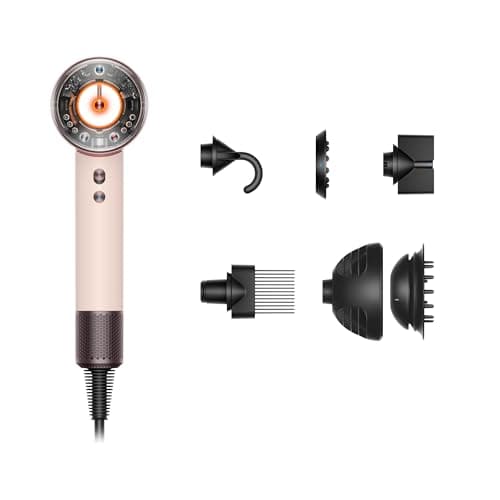
Because airflow does more of the drying, high-speed dryers often pair strong air with heat control. Dyson lists the Supersonic heat settings as 100 C (212 F) fast drying, 80 C (176 F) regular and 60 C (140 F) gentle, plus a constant cold shot of 28 C (82 F), and says the Supersonic measures air temperature over 40 times a second. The Supersonic Nural adds a scalp protect mode with a target of 130 F at the scalp. Use the heat setting guide for typical bands by hair type.
Small fast motors make a higher pitched sound than older dryers. Dyson says the Supersonic motor is acoustically tuned, and ghd mentions low sound levels on the Helios. See how loud is a hair dryer.
Is a high-speed dryer worth it?
If you dry thick or long hair most days, a high-speed dryer is one of the upgrades you are most likely to notice, because it saves time and weight. If your hair is short or you dry it a few times a week, a good conventional dryer may be all you need. Mid-priced high-speed options like the BaBylissPRO Rapido at about $200 listed sit well below Dyson pricing. Compare in Dyson Supersonic vs Laifen, is the Dyson Supersonic worth it and how to choose a hair dryer.
Frequently asked questions
How many watts is the Dyson Supersonic? Dyson rates the US Supersonic at 1600 W. Its drying speed comes mainly from airflow, not wattage.
What is a brushless hair dryer? A dryer with an electronically controlled motor that has no carbon brushes. It can spin faster and is usually smaller and lighter than a brushed motor of similar output.
Are high-speed dryers louder? They often sound higher pitched. Some makers tune the sound, but few publish decibel figures.
Do high-speed dryers use less heat? Many lean more on airflow and offer heat control, but you still choose the heat setting. Start low to medium for fine hair and adjust.
What you need for this
- See price on AmazonAmazon
ghd Helios: 1875W brushless, 75 mph, 9 ft cord
From Best high-speed hair dryers with digital and brushless motors
 See price on AmazonAmazon
Dyson Supersonic Nural: scalp protect mode at 130°F
From Best Dyson hair dryer: Supersonic Nural, r, Origin and Travel