How-to
How to choose a hair dryer: watts, weight, motor and attachments
Published
Short answer
Start with your hair and routine, not the wattage. Thick or long hair benefits most from strong airflow and a concentrator. Fine hair needs low heat and low airflow steps. Curly hair needs a good diffuser. Then check weight, the number of separate heat and speed settings, a cool shot, a removable filter, cord length, and dual voltage if you travel.
Dryers and stylers for this
All 7 picks compared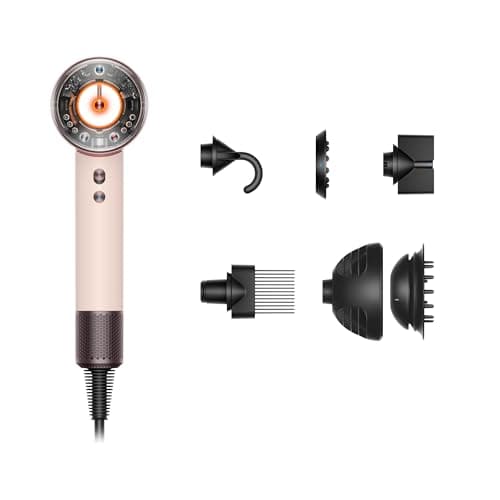
Dyson Supersonic Nural: scalp protect mode at 130°F
See price on AmazonSee it on Amazon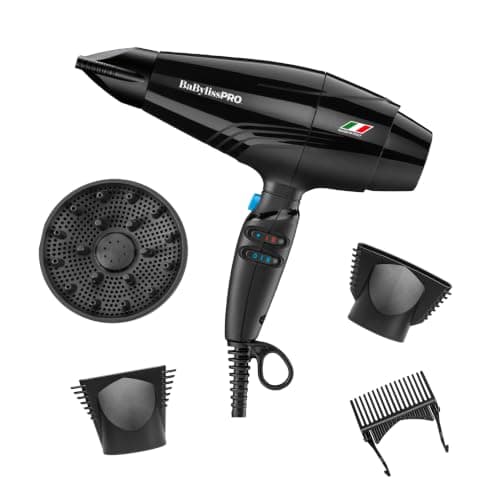
BaBylissPRO Rapido: 2000W brushless, 0.91 lb listed
See price on AmazonSee it on Amazon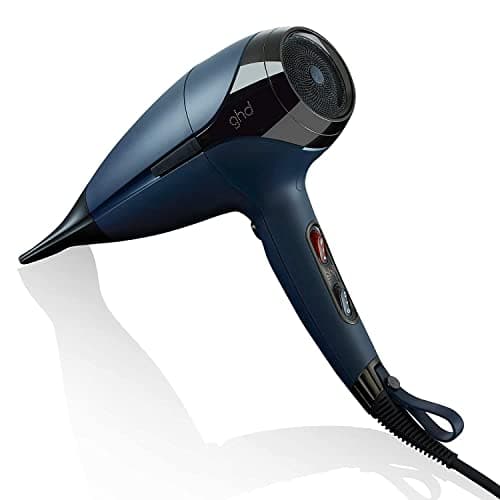
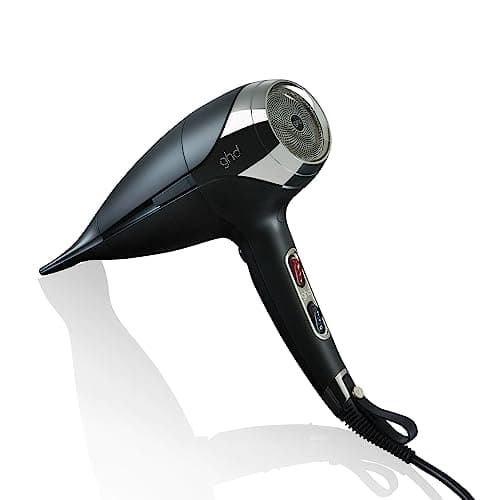
ghd Helios: 1875W brushless motor, 75mph airflow
See price on AmazonSee it on Amazon
Premium hair dryers range from about $150 to well over $400, and the spec sheets throw around watts, brushless motors, ions, rpm and kPa. Some of those numbers matter for your hair and some are mostly marketing. This guide is for anyone deciding what to buy, whether you are replacing a drugstore dryer or weighing a Dyson against a BaBylissPRO or ghd. It explains each spec in plain terms, which ones matter for fine, thick and curly hair, and gives a short checklist at the end. Product facts come from the maker listings in our guides.
Start with your hair type and goal
The right dryer for a person with thick, waist-length hair is not the right one for someone with a fine bob. Before you compare specs, decide what you need most: fast drying, a smooth blowout, volume, or defined curls. Our styler finder matches hair type, length and goal to a tool type and attachments.
Fine or thin
- Prioritize
- Gentle control
- Look for
- Low heat and low airflow steps, light weight
Medium
- Prioritize
- Balance
- Look for
- Several heat and speed steps, concentrator
Thick or coarse
- Prioritize
- Drying speed
- Look for
- Strong airflow, narrow concentrator
Curly
- Prioritize
- Definition
- Look for
- Diffuser, low airflow setting
Coily
- Prioritize
- Stretch and definition
- Look for
- Comb attachment, diffuser, medium heat
| Hair | Prioritize | Look for |
|---|---|---|
| Fine or thin | Gentle control | Low heat and low airflow steps, light weight |
| Medium | Balance | Several heat and speed steps, concentrator |
| Thick or coarse | Drying speed | Strong airflow, narrow concentrator |
| Curly | Definition | Diffuser, low airflow setting |
| Coily | Stretch and definition | Comb attachment, diffuser, medium heat |
Wattage: what the number means
Wattage is how much power the dryer draws from the wall. Most full-size US dryers are around 1600 to 2000 watts, and 1875 W is a very common rating. Higher wattage can mean more heat and airflow, but it does not tell you how well the dryer turns that power into airflow at the nozzle. A well-designed 1600 W dryer can dry as fast as a less efficient 2000 W one.
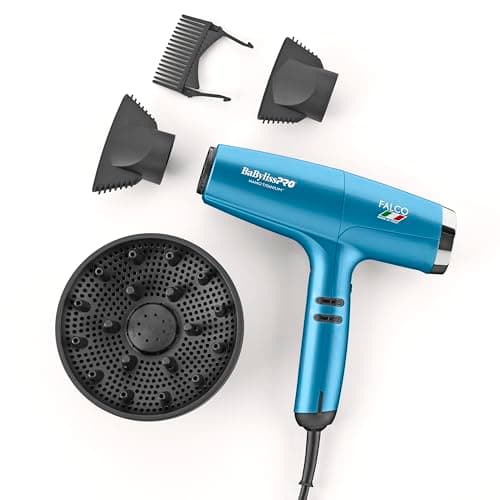
Listings in our guides show the range: the BaBylissPRO Rapido and Falco list 2000 W, the ghd Helios and Bio Ionic PowerDiva list 1875 W, and the travel BaBylissPRO Nano Light lists 1400 W. See hair dryer wattage explained for more.
Motor type: brushless and high speed
Traditional dryers use brushed AC or DC motors. Many premium dryers now use brushless digital motors, which spin much faster and can be smaller and lighter for the same airflow. Dyson lists the V9 digital motor in its Airwrap at up to 110,000 rpm. BaBylissPRO, ghd and T3 list brushless or digital motors on several current models.
A brushless motor has no carbon brushes to wear out, which is one reason makers market them as long lasting. They also tend to cost more. Read high-speed hair dryers explained for how they work.
- 1Air intake and filter: keep it clean, or the dryer runs hot
- 2Motor and fan: pull air in and push it forward
- 3Heating element: warms the air as it passes
- 4Ion generator, on dryers that list one
- 5Nozzle: where attachments clip on
- 6Heat and speed buttons
- 7Cool shot button: unheated air to set the style
- 8Cord
Weight, settings and controls
Weight matters more than most people expect if you have long or thick hair, because you hold the dryer up for a long time. Listings include the BaBylissPRO Dual Ionic at 0.88 lb and the Rapido at 0.91 lb. Check whether the stated weight includes the cord. See hair dryer weight explained.
Look for separate heat and speed controls, so you can pair low heat with high airflow for fast, gentle rough drying. Counts vary a lot: the T3 AireLuxe lists 5 heat and 3 speed settings, the Neuro Halo lists 3 heat and 3 airflow settings, and the Bio Ionic PowerDiva lists 14 heat and power settings. A cool shot button is standard on almost every dryer here and is worth using. See cool shot button explained.
Attachments, ions and other features
Smart features like attachment recognition and automatic heat adjustment appear on the Dyson Supersonic Nural and T3 Aire IQ. They are convenient but not essential. Read hair dryer attachments explained and what is an ionic hair dryer.
Concentrator
Narrow jet for smoothing with a brush
Diffuser
Wide, soft spread for curls
Wide-tooth comb
Air flows through the teeth to stretch curly and coily hair
Smoothing nozzle
Wide, flat, gentler airflow for finishing
- Concentrator nozzle: needed for a smooth blowout. Two sizes is a plus for thick hair.
- Diffuser: needed for curls. Check that it is included, not sold separately.
- Comb or pick attachment: useful for stretching curly and coily hair.
- Ionic setting: most premium dryers have one. Makers say ions help reduce static.
- Removable filter: makes cleaning easy, which keeps airflow up. See how to clean a hair dryer filter.
- Cord length: 9 ft is common on professional models.
- Voltage: dual or universal voltage matters only if you travel abroad.
Noise, warranty and price
If you dry early in the morning, noise is worth checking. Several makers mention it: Dyson says the Supersonic motor is acoustically tuned, and ghd mentions low sound levels on the Helios. Few publish decibel figures. See how loud is a hair dryer.
Warranty length is a fair signal of how long a maker expects the dryer to last. Check the listing or maker page before you buy. Spending more buys faster drying, lighter weight and better attachments, but a solid $200 dryer covers most needs. See best hair dryers from $150 to $300.
Quick buying checklist
- 1
Name your goal: fast drying, smooth blowout, volume or curls.
- 2
Pick the attachments you need and confirm they are included.
- 3
Check separate heat and speed controls with a true low setting.
- 4
Check weight, especially for long or thick hair.
- 5
Look for a removable or easy-to-clean filter and a cool shot.
- 6
Check cord length, voltage and warranty.
Frequently asked questions
Is a higher wattage hair dryer better? Not always. Wattage is power draw, not airflow. Motor and nozzle design decide how fast a dryer actually dries.
Are expensive hair dryers worth it? They usually dry faster, weigh less and have better controls and attachments. Whether that is worth the price depends on how often and how long you dry. See is the Dyson Supersonic worth it.
What hair dryer is best for thick hair? Look for strong airflow and a narrow concentrator. See best hair dryers for thick hair.
Do I need an ionic hair dryer? Most premium dryers already include ions. Makers say they help reduce static and frizz, so treat it as a standard feature rather than a reason to choose one model.
What you need for this
- See price on AmazonAmazon
Dyson Supersonic Nural: scalp protect mode at 130°F
 See price on AmazonAmazon
BaBylissPRO Falco: 2000W with 4 attachments
 See price on AmazonAmazon
ghd Helios: 1875W brushless, 75 mph, 9 ft cord
From Best high-speed hair dryers with digital and brushless motors